

Research
SPACEFLIGHT MISSON & CONTROL LAB
Research Topic
Guidance and Control Algorithms
for Space Rendezvous
and Docking System
A. 랑데부 도킹 궤도 유도 알고리즘
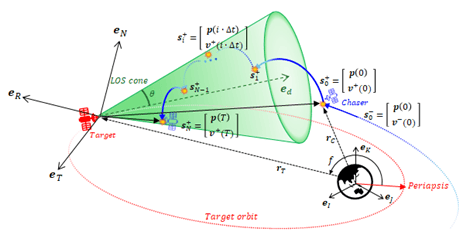
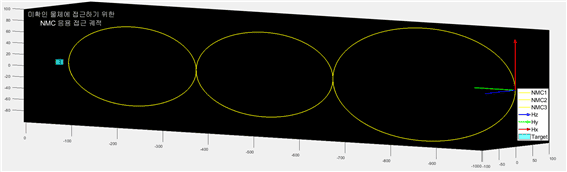
우리 연구팀은 랑데부 및 도킹 과정에서 우주선의 궤도를 유도하는 알고리즘을 연구하고 있습니다. 특히 고정된 크기의 연속 추력을 활용한 유도 알고리즘을 개발하는 데 집중하고 있습니다. 본 연구에서는 해석적으로 도출된 순간 추력 벡터를 고정된 크기의 연속 추력 형태로 변환하는 방법을 탐색하고 있습니다. 또한, 변환된 유도 알고리즘의 성능을 최적화 문제와 비교하여 검증하는 연구를 수행하고 있습니다. 이러한 연구를 통해 정밀하고 신뢰성 높은 랑데부 및 도킹 기술을 개발하여, 향후 우주 탐사 및 다양한 우주 임무에서 보다 안정적이고 효율적인 궤도 유도 전략을 제공하는 것을 목표로 하고 있습니다.
Our research team is studying algorithms for guiding spacecraft trajectories during rendezvous and docking operations, with a particular focus on developing guidance algorithms based on fixed-magnitude continuous thrust. In this study, we explore methods to transform analytically derived impulse thrust vectors into a fixed-magnitude continuous thrust form. Additionally, we are conducting research to validate the performance of the transformed guidance algorithm by comparing it with optimization-based approaches. Through this research, we aim to develop precise and reliable rendezvous and docking technologies, ultimately providing more stable and efficient trajectory guidance strategies for future space exploration and various space missions.
B. 지상 시뮬레이터 장치 관련
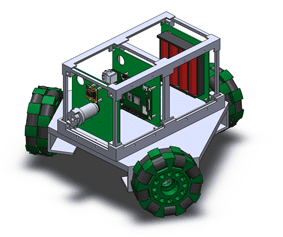
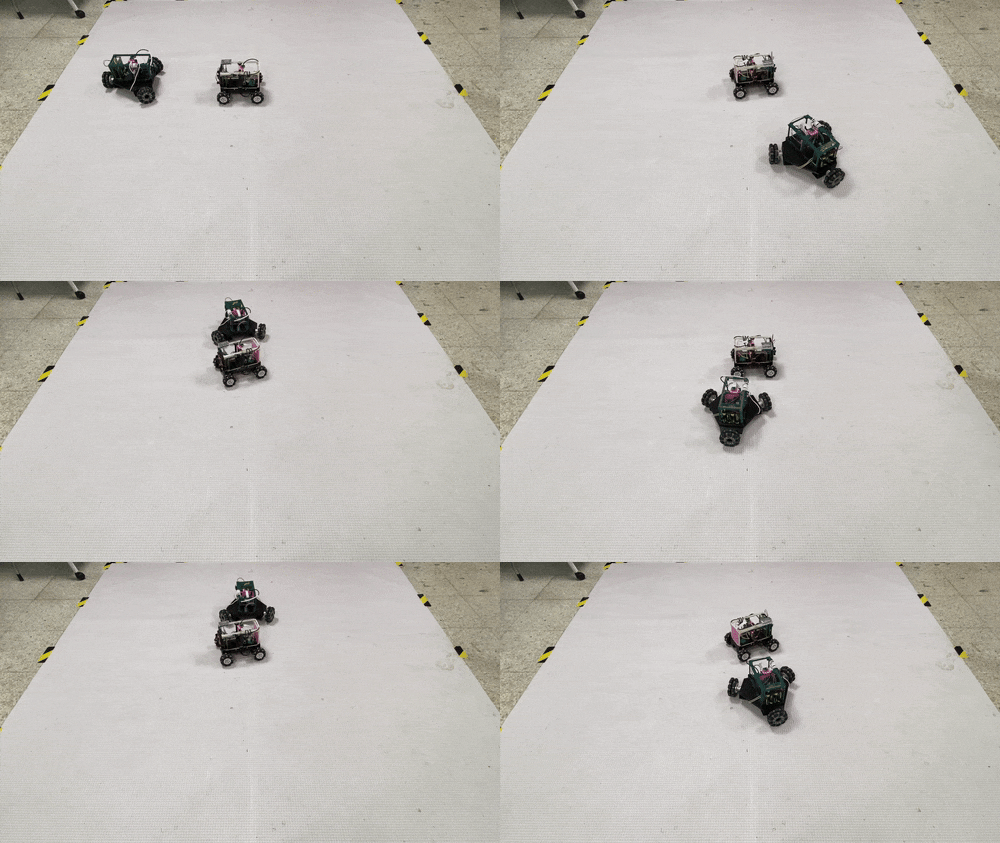
우리 연구실은 랑데부/도킹 임무를 모사하기 위한 지상 시험장치를 설계 및 제작합니다. 실제로 랑데부/도킹 임무에서 우주비행체는 매우 빠른 속도로 움직이고 있으며, 다양한 궤적을 가질 수 있습니다. 두 기의 시뮬레이터는 각각 Chaser, Target 우주 비행체의 움직임을 모사하며, 최적화 기법을 통해 설계된 다양한 궤적을 실제 임무에 적용하기 전에 지상 시험 장치를 통해 검증하고자 합니다. 또한 상대 물체의 Pose estimation 기법에 대한 연구를 위해 다양한 센서와 마커등을 지상 시험장치에 장착하여 그 센서와 알고리즘에 대한 검증을 진행할 수 있습니다. 현재 추력기를 이용한 지상 시험장치 설계를 통해 기존보다 정밀한 모사가 가능한 시뮬레이터 설계 및 제작 연구를 진행하고 있습니다
Our research laboratory designs and develops ground test equipment to simulate rendezvous and docking missions. In actual rendezvous and docking missions, spacecraft move at extremely high speeds and can follow various trajectories. The two simulators mimic the movements of the Chaser and Target spacecraft, allowing us to validate optimized trajectories on the ground before applying them to actual missions. Additionally, to support research on pose estimation techniques for relative objects, various sensors and markers are mounted on the ground test equipment, enabling verification of both the sensors and the algorithms used. Currently, we are working on designing and developing a ground test system utilizing thrusters, which allows for more precise simulation compared to existing systems