

Research
SPACEFLIGHT MISSON & CONTROL LAB
Research Topic
Spacecraft Attitude
Guidance and Control
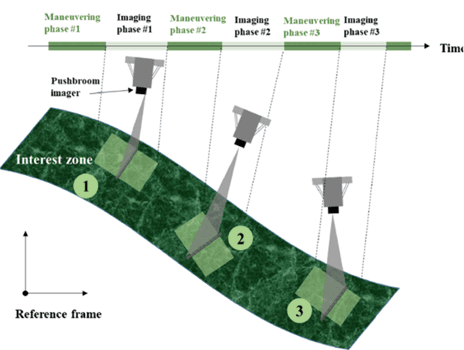
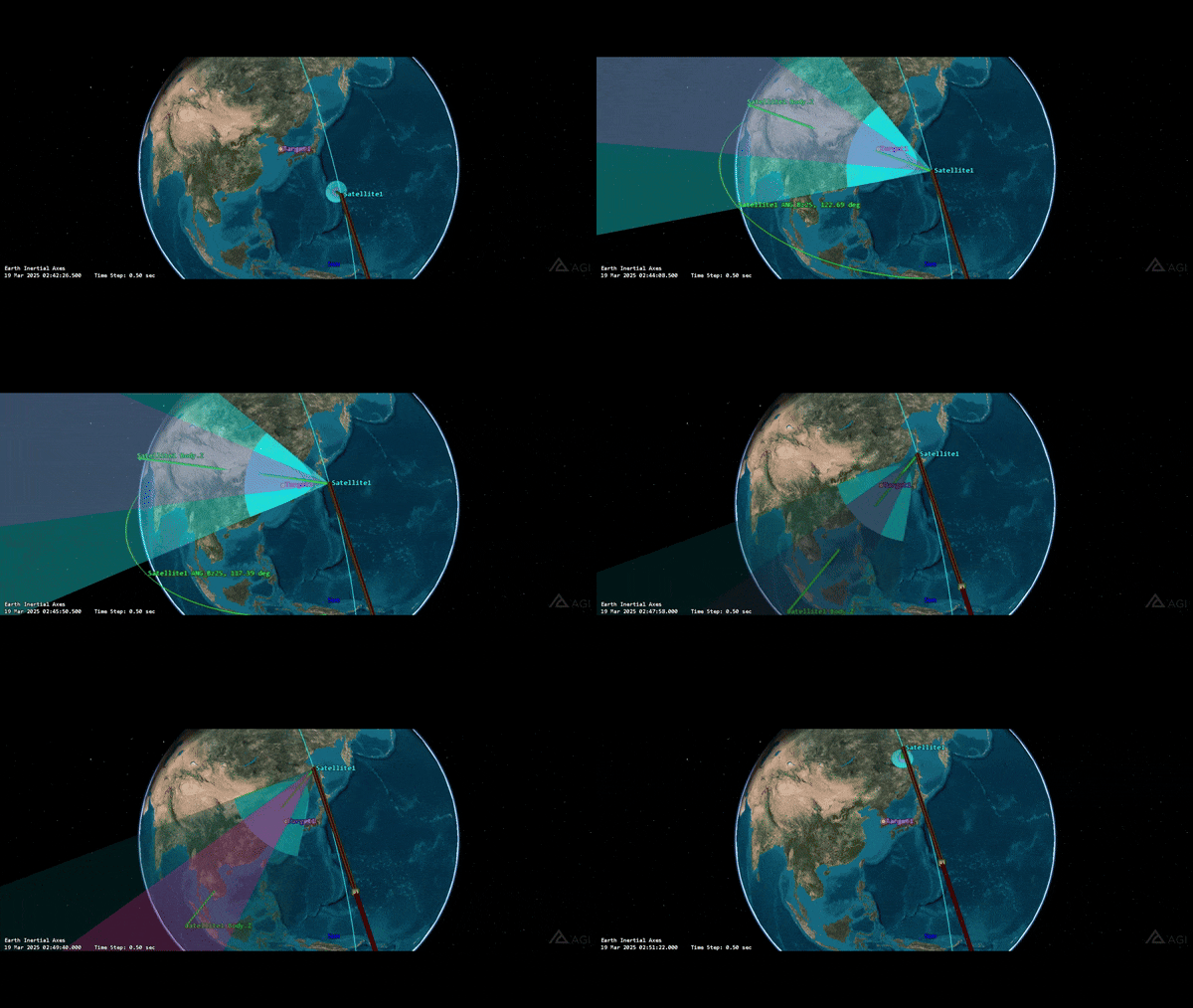
우리 연구실은 인공위성의 자세 유도 및 제어에 대한 연구를 수행하고 있습니다.
궤도 상에서 위성의 안테나와 탑재체를 원하는 방향으로 지향하고, 이를 안정적으로 유지하기 위해서는 자세 유도 프로파일과 다양한 구동기를 통한 정밀한 제어에 대한 연구가 필수적입니다.
인공위성의 자세 기동에서는 하드웨어에 의한 제한, 지상국과의 통신을 위한 자세 조건뿐만 아니라, 핵심 임무 중 한 가지인 관측 임무의 경우 spin-to-spin 경계 조건도 고려해야 합니다.
우리 연구실은 이러한 복잡한 제약을 준수하면서 신속하고 안정적인 임무 수행이 가능하도록 하는 최적 자세 유도 알고리즘을 연구하고 있습니다.
또한, 설계된 프로파일을 효율적으로 위성에 업로드하는 탑재 소프트웨어를 개발하며, 반작용 휠, CMG, 추력기를 활용한 자세 기동 성능 개선 및 구동기 고장 대응 기법도 연구하고 있습니다.
이러한 연구를 통해 보다 안정적이고 정밀하게 위성을 제어하여 다양한 임무에서 성공률과 신뢰성을 높이는 것을 목표로 하고 있습니다.
Our research laboratory conducts studies on attitude guidance and control for satellites. To ensure that a satellite's antenna and payload are oriented in the desired direction and maintained stably in orbit, it is essential to research attitude guidance profiles and precise control using various actuators. In satellite attitude maneuvers, various constraints must be considered, including hardware limitations, attitude requirements for communication with ground stations, and, in the case of observation missions—one of the key tasks—spin-to-spin boundary conditions. Our research laboratory is developing optimal attitude guidance algorithms that enable fast and stable mission execution while adhering to these complex constraints. Additionally, we are developing onboard software to efficiently upload the designed attitude guidance profiles to satellites. We also conduct research on improving attitude maneuver performance using reaction wheels, control moment gyroscopes (CMGs), and thrusters, as well as fault-tolerant control strategies for actuator failures.
Through this research, we aim to enhance the stability and precision of satellite control, thereby increasing mission success rates and reliability across various applications.